
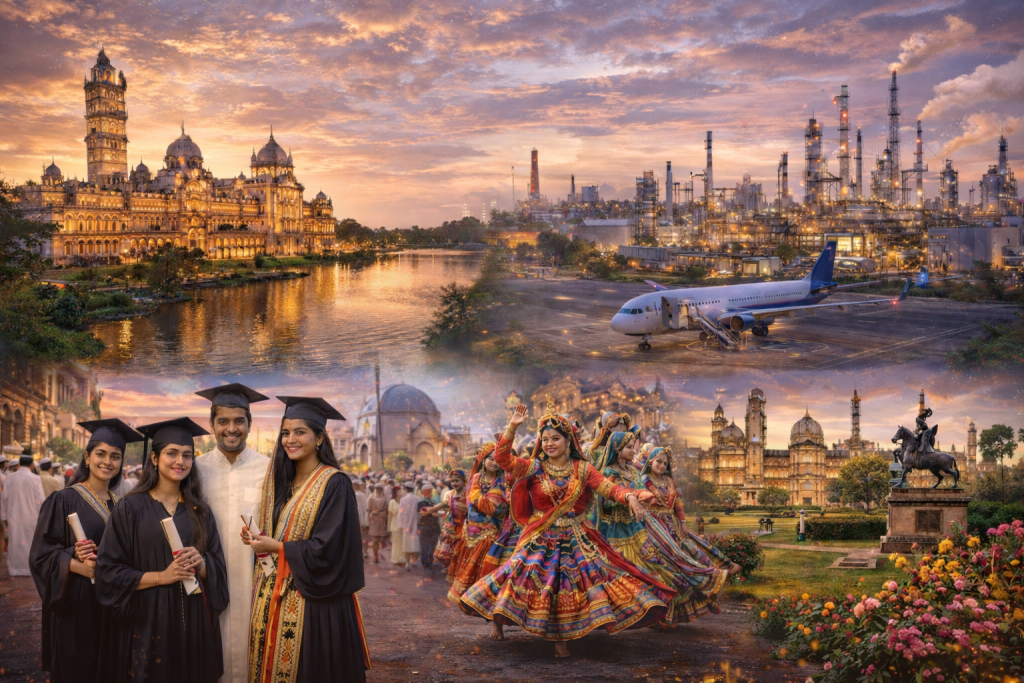
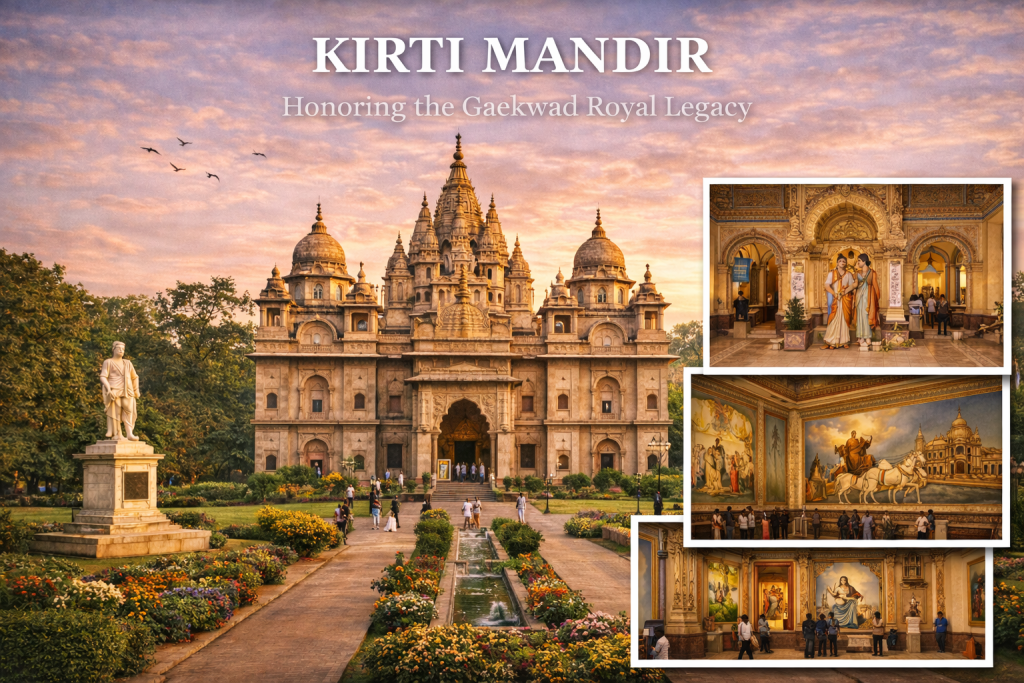
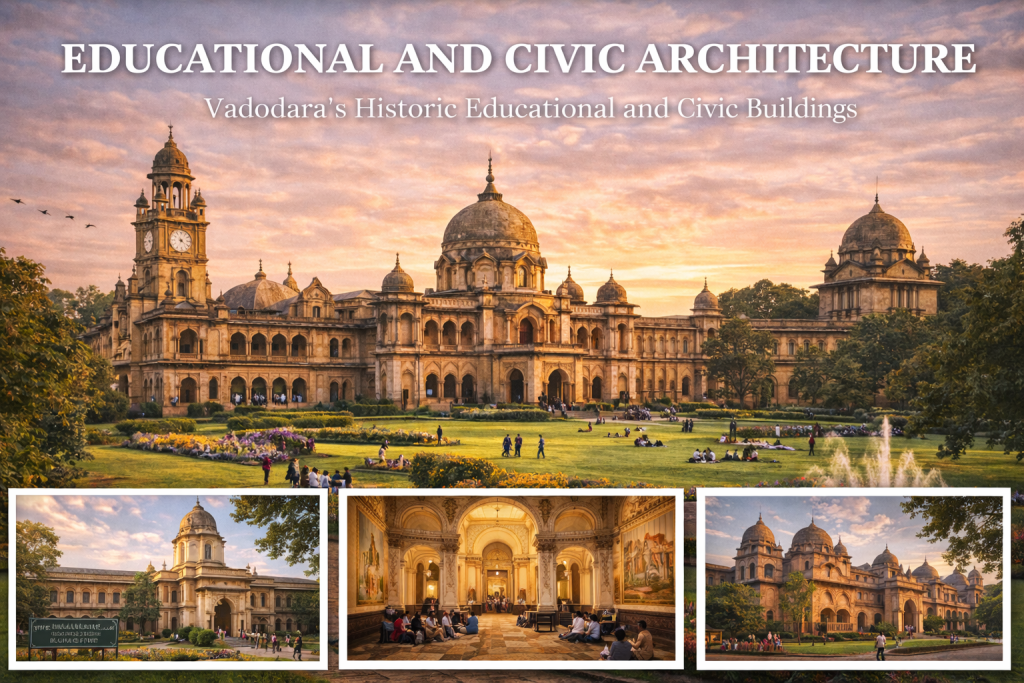
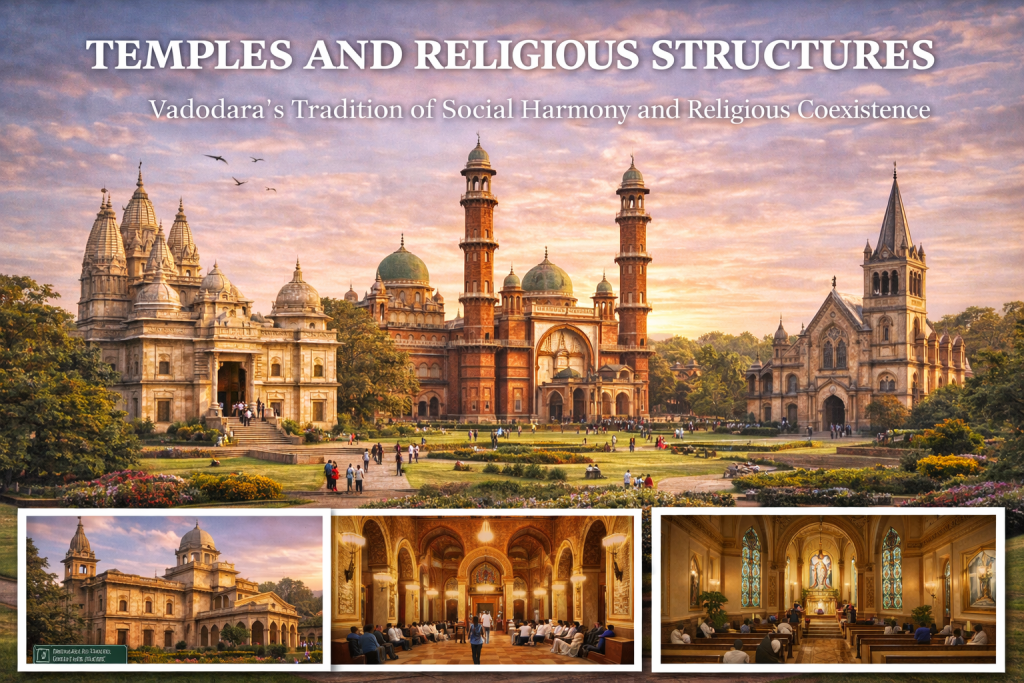
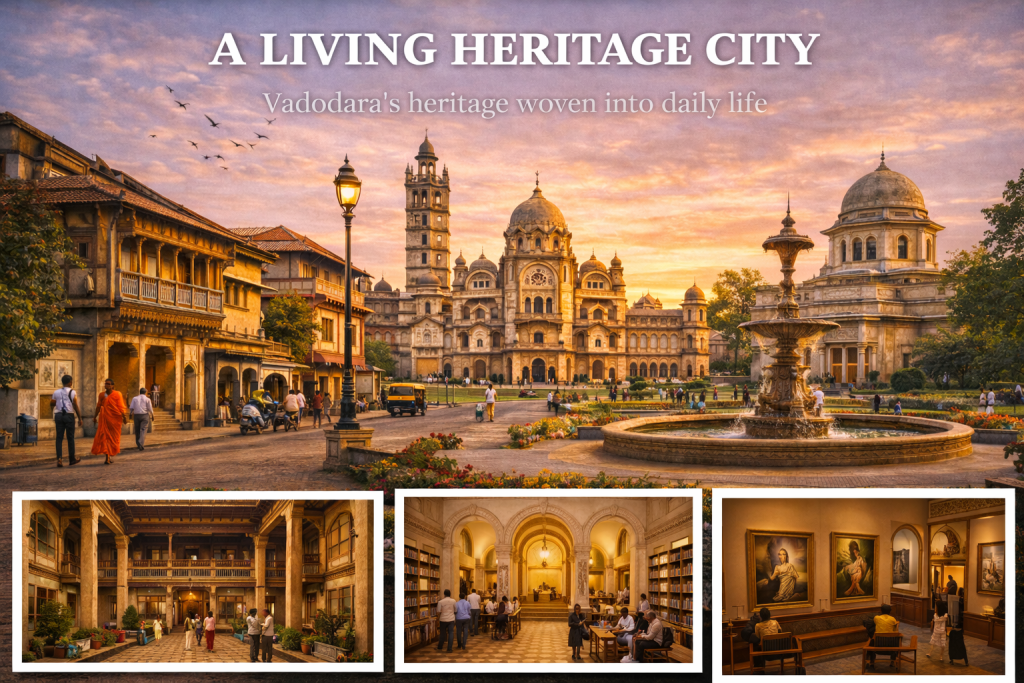
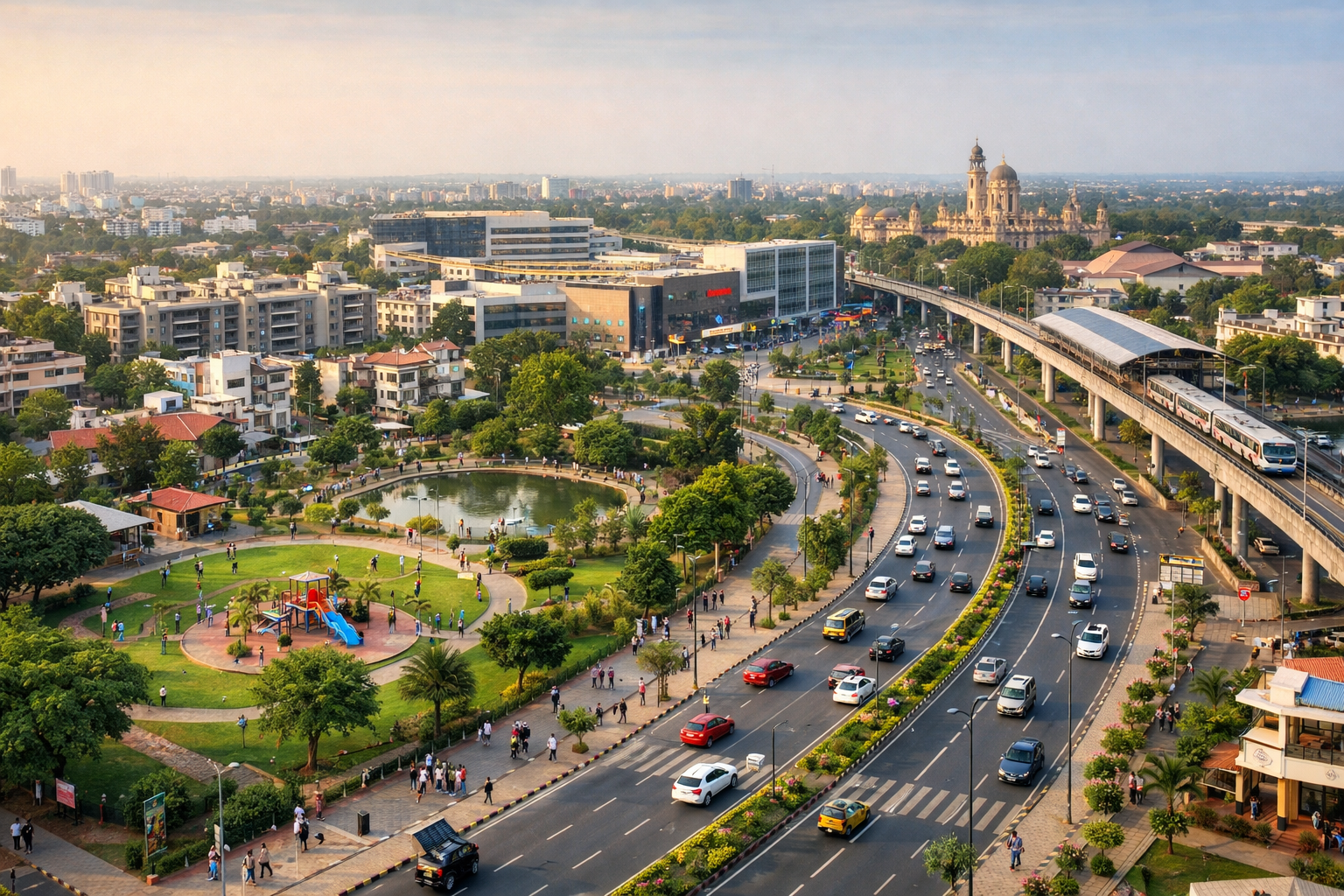
Welcome to Vadodara, a city where royal heritage meets modern progress. Nestled along the banks of the Vishwamitri River in Gujarat, Vadodara is known for its rich history, vibrant culture, and welcoming spirit. Once ruled by the visionary Gaekwad dynasty, the city continues to reflect elegance, creativity, and growth in every corner.
Vadodara proudly stands as the Cultural Capital of Gujarat, celebrated for its classical arts, education, festivals, and architectural landmarks. From majestic palaces and serene gardens to bustling markets and modern institutions, the city offers a unique blend of tradition and contemporary life.
Whether you are a visitor exploring its heritage, a student seeking knowledge, or a resident building a future, Vadodara welcomes you with warmth, opportunity, and timeless charm.
Vadodara, formerly known as Baroda, is one of Gujarat’s most historically rich, culturally vibrant, and rapidly developing cities. Situated on the banks of the Vishwamitri River, Vadodara is the third-largest city in the state and serves as the administrative headquarters of Vadodara District. The city is widely admired for its balanced character—where royal heritage, artistic excellence, academic brilliance, and modern industry coexist seamlessly.
The name Vadodara is derived from the Gujarati word “Vaḍ” (banyan tree), symbolizing the city’s origins amid lush greenery and riverbanks. Over centuries, Vadodara has evolved into a progressive urban center while preserving its deep-rooted traditions and cultural identity.
Vadodara, also known as Baroda, is one of the major cities in the Indian state of Gujarat. Located on the banks of the Vishwamitri River, the city serves as an important cultural, educational, and industrial center in western India. Known for its royal heritage and progressive outlook, Vadodara beautifully balances tradition with modern development.
The city gained prominence under the Gaekwad dynasty, whose vision shaped Vadodara into a hub of education, art, and social reform. Today, this legacy continues through its historic palaces, museums, public gardens, and academic institutions. Vadodara is widely recognized as the Cultural Capital of Gujarat, with a strong presence in classical music, dance, fine arts, and festivals.
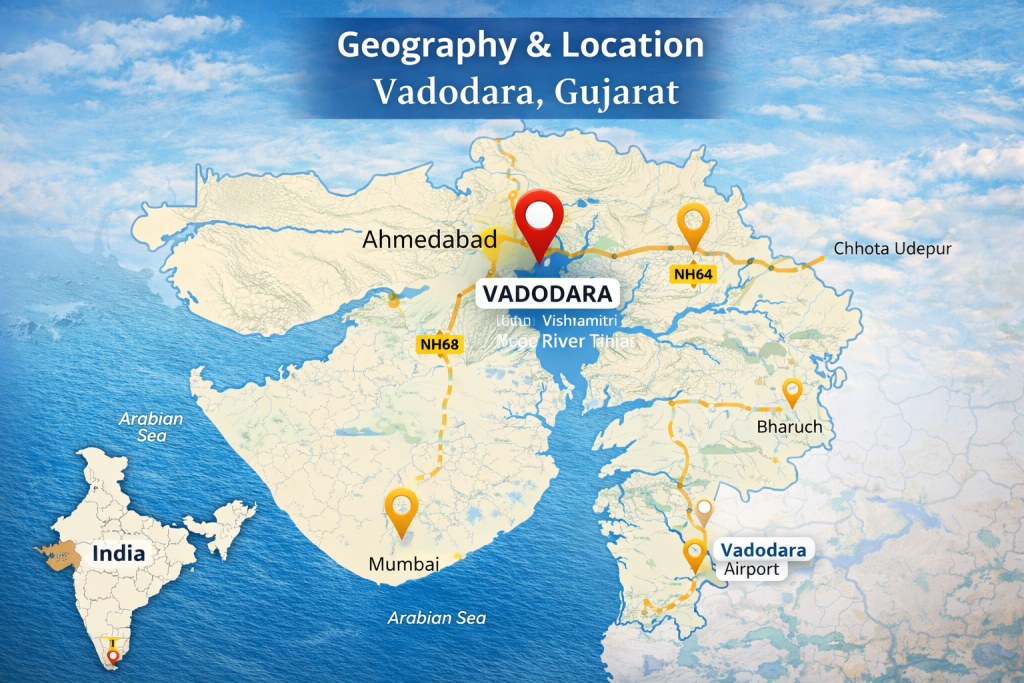
Vadodara is situated in central Gujarat, western India, on the banks of the Vishwamitri River, which flows through the heart of the city. The region features a predominantly flat and fertile landscape, making it suitable for urban expansion as well as surrounding agricultural activities. The city experiences a tropical savanna climate, with hot summers, moderate monsoons, and mild winters.
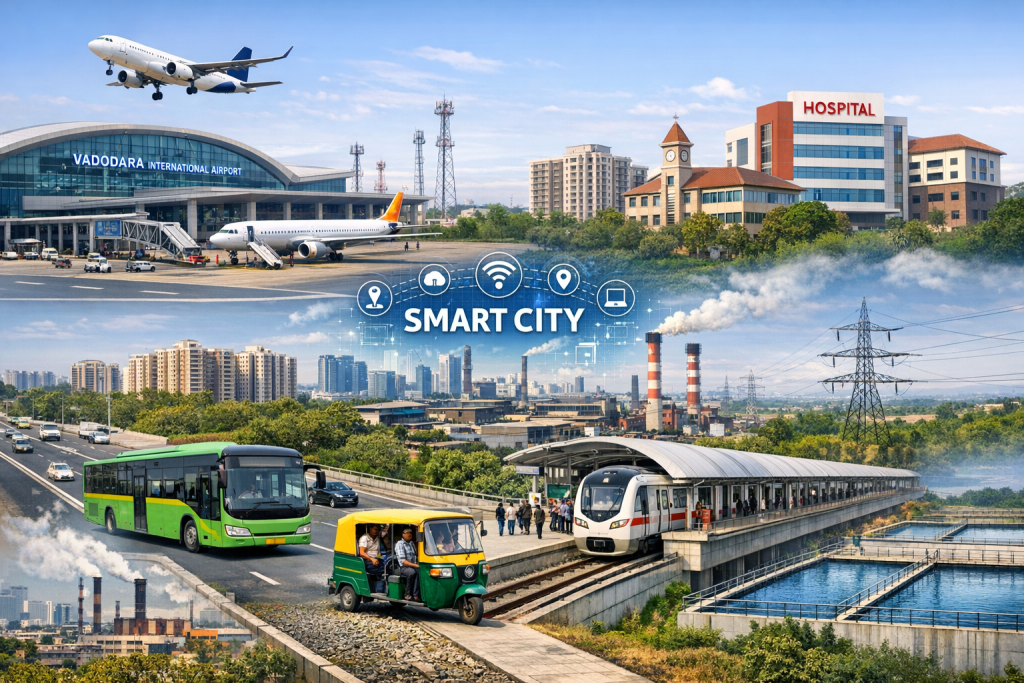
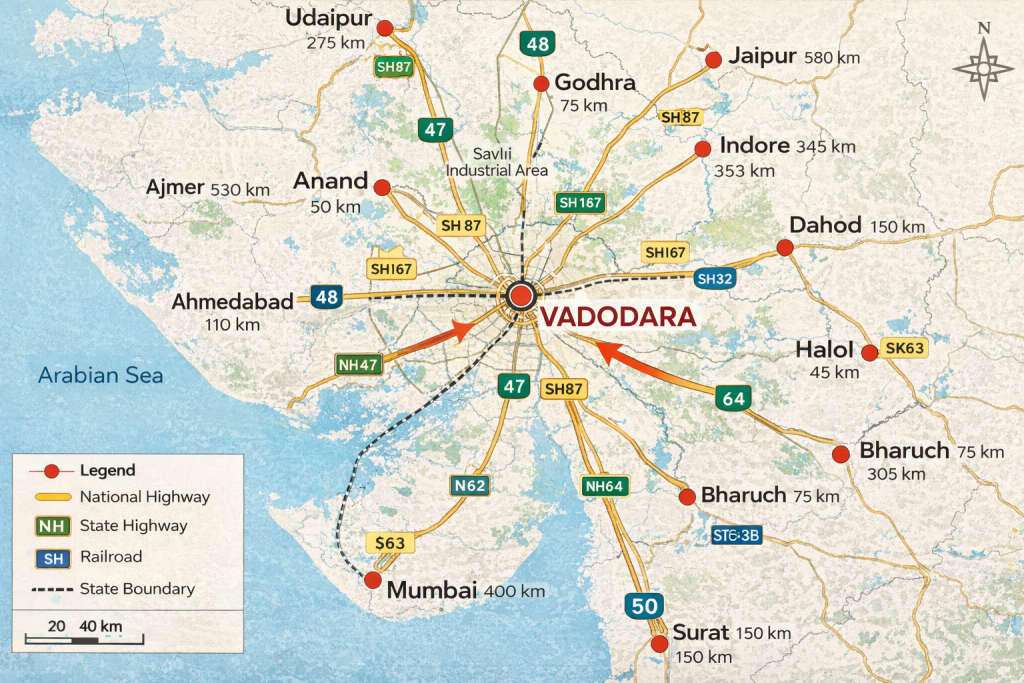
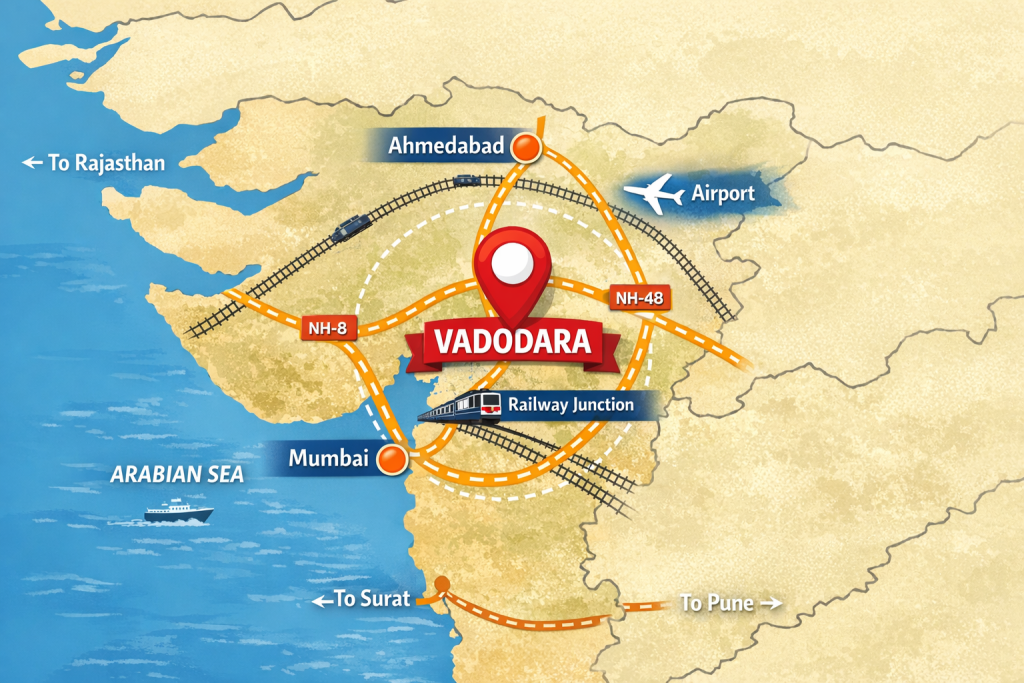
Strategically positioned between Ahmedabad and Mumbai, Vadodara serves as an important transportation and commercial link in the state. It is well connected by national highways, railway networks, and an airport, ensuring easy accessibility for trade, travel, and tourism. Its central location has played a key role in the city’s steady growth and economic importance within Gujarat.
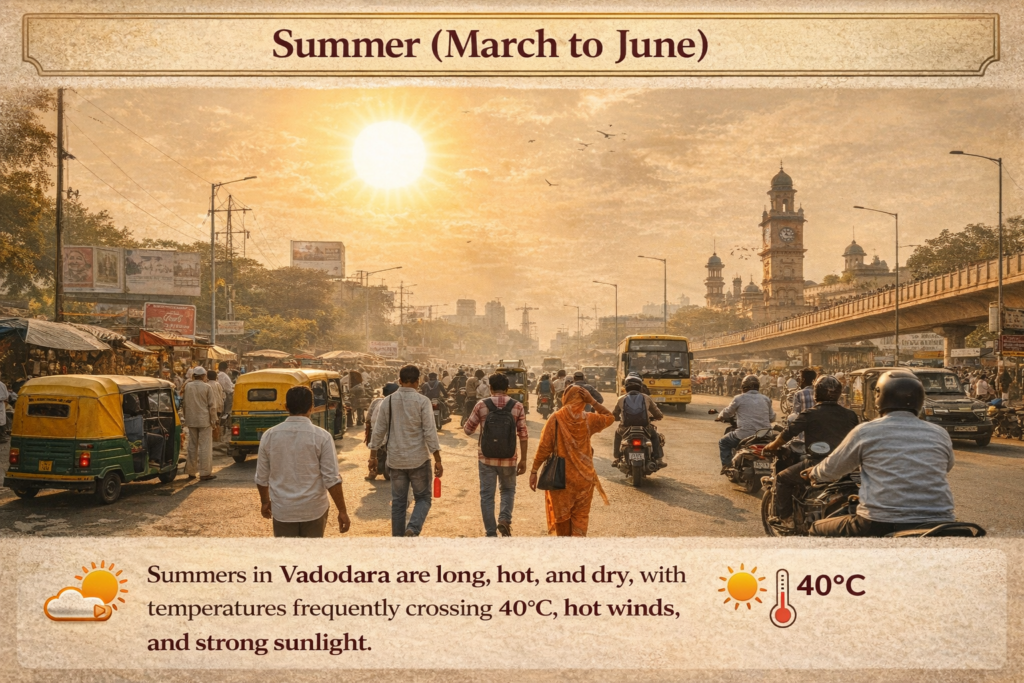
Vadodara experiences a tropical savanna climate with distinct summer, monsoon, and winter seasons. Summers, from March to June, are hot and dry, with temperatures often ranging between 35°C and 42°C. The heat is more intense during April and May, while early mornings and evenings remain relatively calmer.
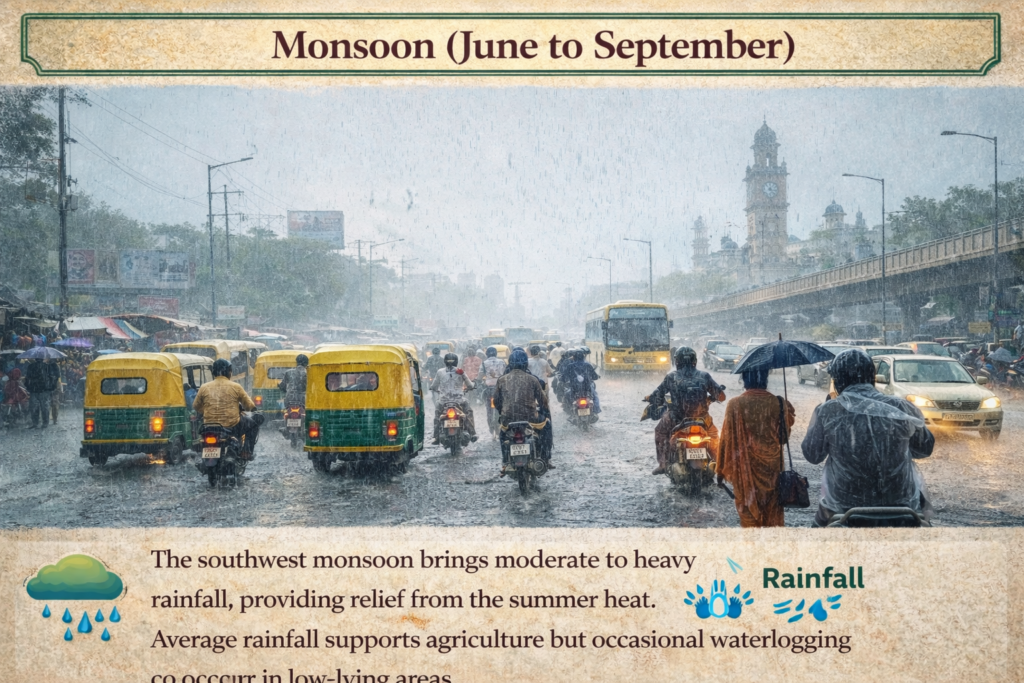
The monsoon season lasts from June to September and brings moderate to heavy rainfall, which helps reduce temperatures and adds greenery across the city. Rainfall supports agriculture, replenishes water resources, and improves overall environmental conditions, though occasional waterlogging may occur in some areas.
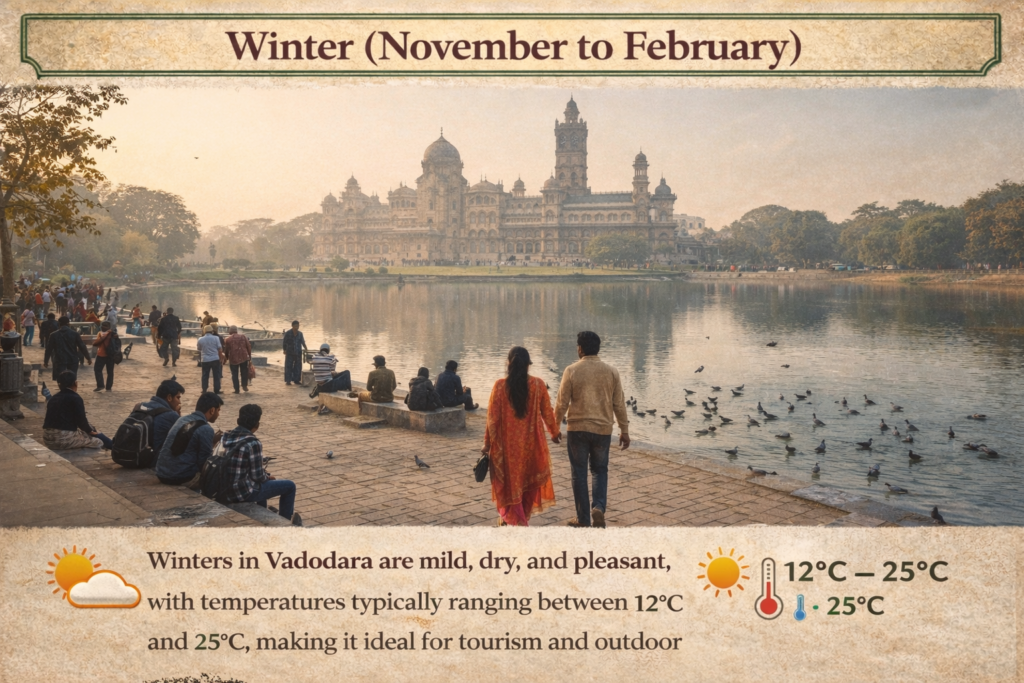
Winters, from November to February, are mild and pleasant, with temperatures ranging between 12°C and 25°C. This season is ideal for outdoor activities, festivals, and tourism due to the comfortable weather. Overall, Vadodara’s climate supports a balanced lifestyle, with seasonal changes influencing daily life, culture, and city activities throughout the year.
Vadodara’s history dates back to early settlements around the 5th century. The region passed through several dynasties, including the Chalukyas, Solankis, Delhi Sultanate, and the Mughals. However, the most transformative chapter in the city’s history began in the 18th century under the Gaekwad dynasty of the Marathas.
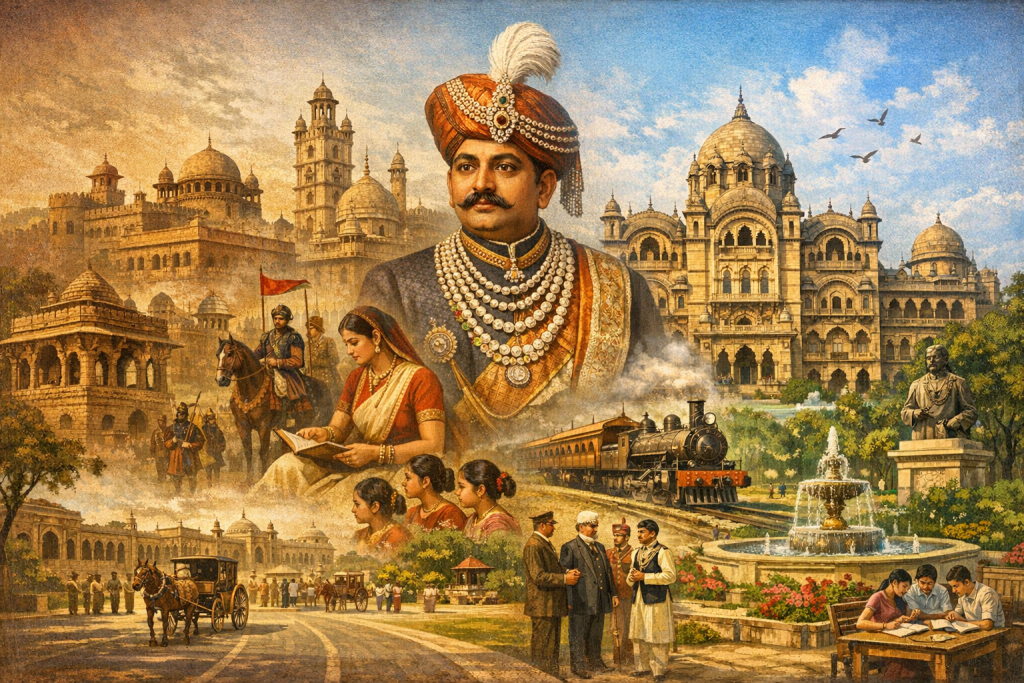
Under visionary rulers—particularly Maharaja Sayajirao Gaekwad III—Vadodara experienced unprecedented development. The Gaekwads invested heavily in education, social reform, public infrastructure, and the arts, long before such initiatives were common in India. During British rule, Baroda State was recognized as one of the most progressive and well-administered princely states.
Many of the city’s grand structures, wide roads, gardens, and institutions were established during this golden era, leaving a lasting impact on Vadodara’s urban and cultural landscape.
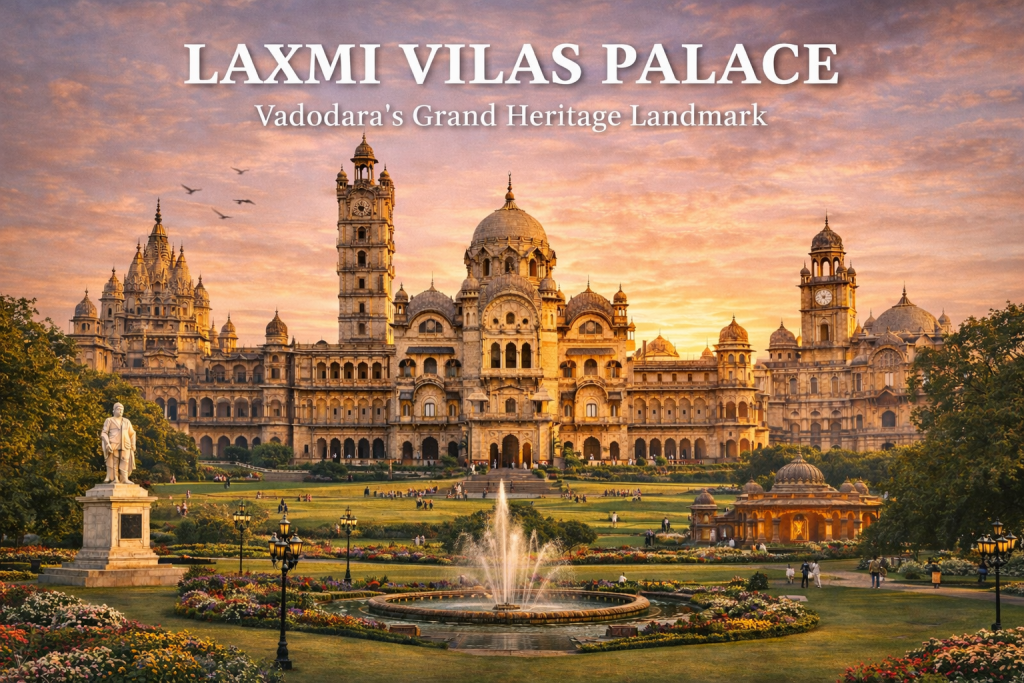
Vadodara is renowned for its architectural diversity, blending Indo-Saracenic, European, and traditional Indian styles. The most iconic landmark is the Laxmi Vilas Palace, an architectural masterpiece and one of the largest private residences in the world. It reflects the city’s royal grandeur and continues to be a symbol of Vadodara’s heritage.
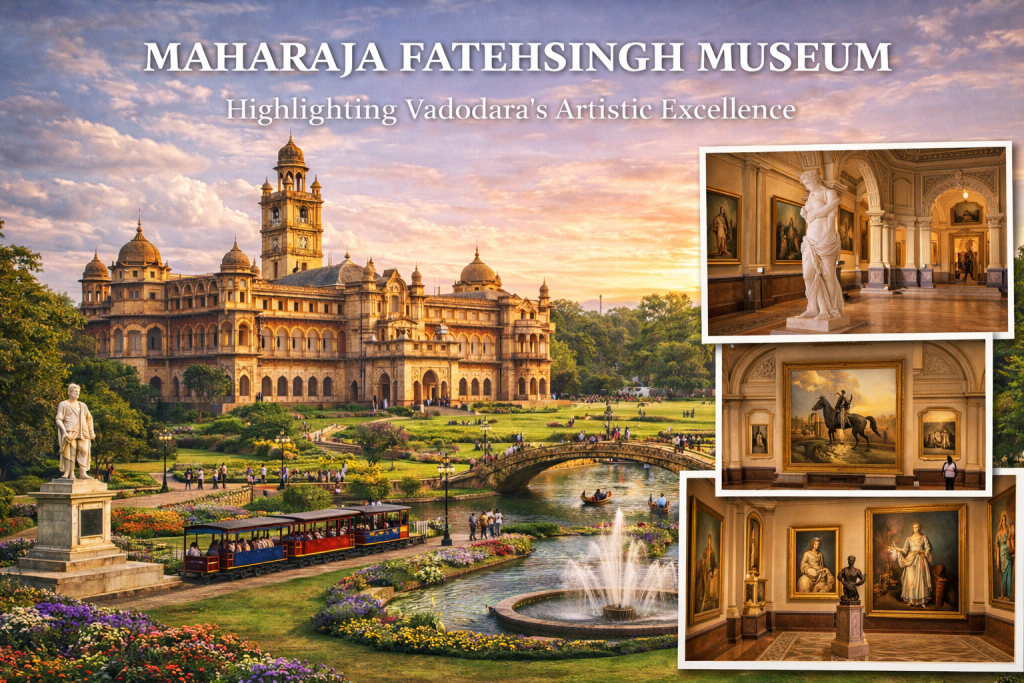
Other notable landmarks include Sayaji Baug (Kamati Baug)—one of India’s largest public gardens—along with museums, libraries, heritage buildings, temples, and cultural halls. These sites collectively showcase Vadodara’s historical depth and artistic vision.
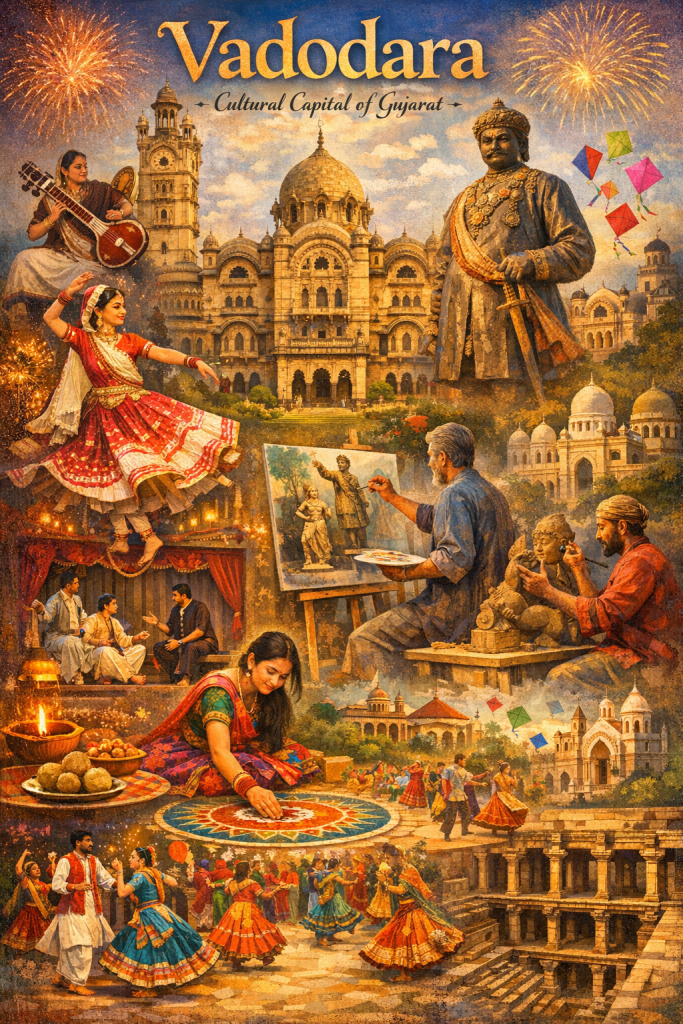
Vadodara proudly holds the title of the Cultural Capital of Gujarat, a recognition built on centuries of artistic patronage, intellectual growth, and cultural continuity. The city’s cultural foundation was firmly established during the rule of the Gaekwad dynasty, especially under Maharaja Sayajirao Gaekwad III, whose progressive vision emphasized education, fine arts, music, and social reform. This enlightened support transformed Vadodara into a thriving center of creativity and learning, attracting artists, scholars, and performers from across India.
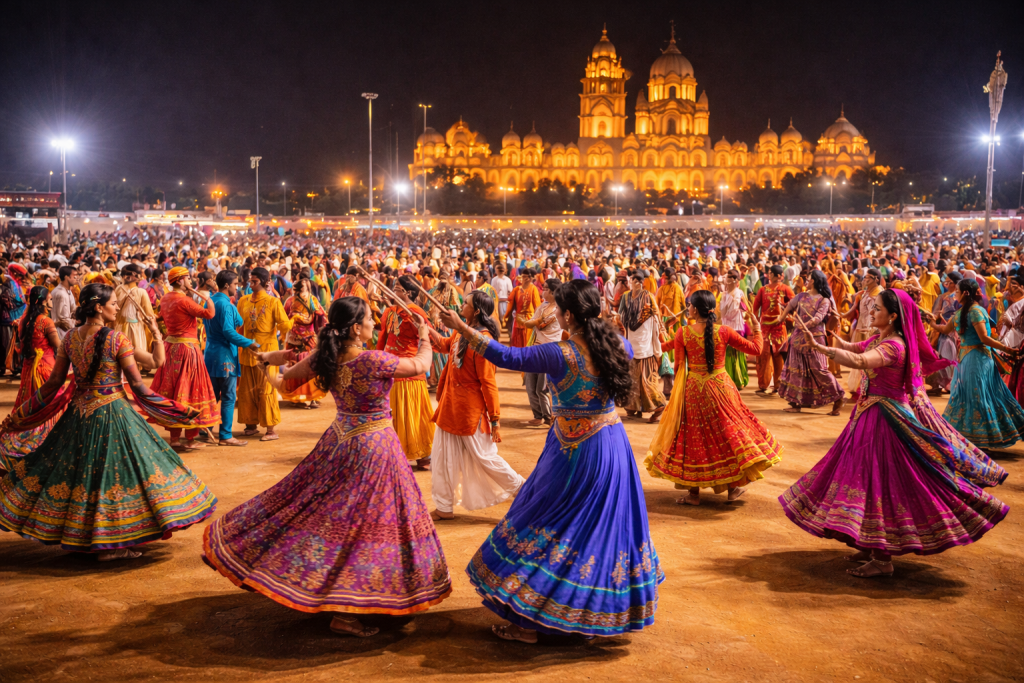
The city has a rich tradition of classical music, dance, theatre, literature, and visual arts. Vadodara is particularly renowned for its disciplined and elegant Navratri celebrations, where traditional Garba and Dandiya Raas are performed with cultural authenticity and devotion. These celebrations reflect the city’s deep respect for tradition while fostering community participation and unity.
Vadodara is also home to prestigious institutions that continue to nurture artistic excellence and intellectual thought. Art galleries, cultural centers, music academies, and educational institutions play an active role in preserving heritage while encouraging innovation and contemporary expression. Festivals, exhibitions, concerts, literary events, and theatre performances are an integral part of everyday life, making culture accessible to all sections of society.
Beyond organized events, culture in Vadodara is deeply woven into daily living—visible in local customs, traditional attire, cuisine, and neighborhood celebrations. This seamless blend of heritage and modern life, combined with a spirit of inclusiveness and creativity, ensures that Vadodara remains a living, evolving cultural capital that honors its past while embracing the future.
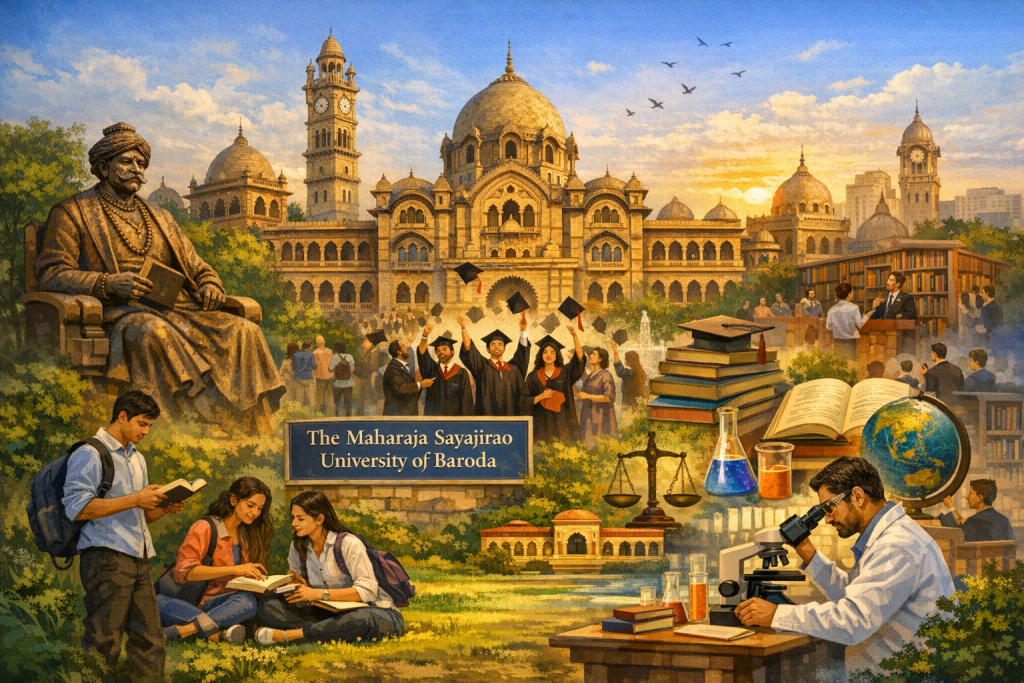
Vadodara is widely recognized as one of Gujarat’s most important education and intellectual centers, a reputation built on a strong foundation of academic excellence, progressive thinking, and cultural learning. The city’s commitment to education was significantly strengthened during the reign of the Gaekwad dynasty, particularly under Maharaja Sayajirao Gaekwad III, who believed that education was the cornerstone of social development. His visionary initiatives laid the groundwork for Vadodara’s emergence as a leading center of knowledge and research.
At the heart of the city’s academic identity is The Maharaja Sayajirao University of Baroda, one of India’s premier universities. Known for its diverse disciplines—including arts, science, engineering, law, fine arts, social sciences, and management—the university has produced generations of scholars, artists, administrators, and professionals who have made notable contributions at national and international levels. Its emphasis on creativity, research, and interdisciplinary learning sets it apart as a unique institutio
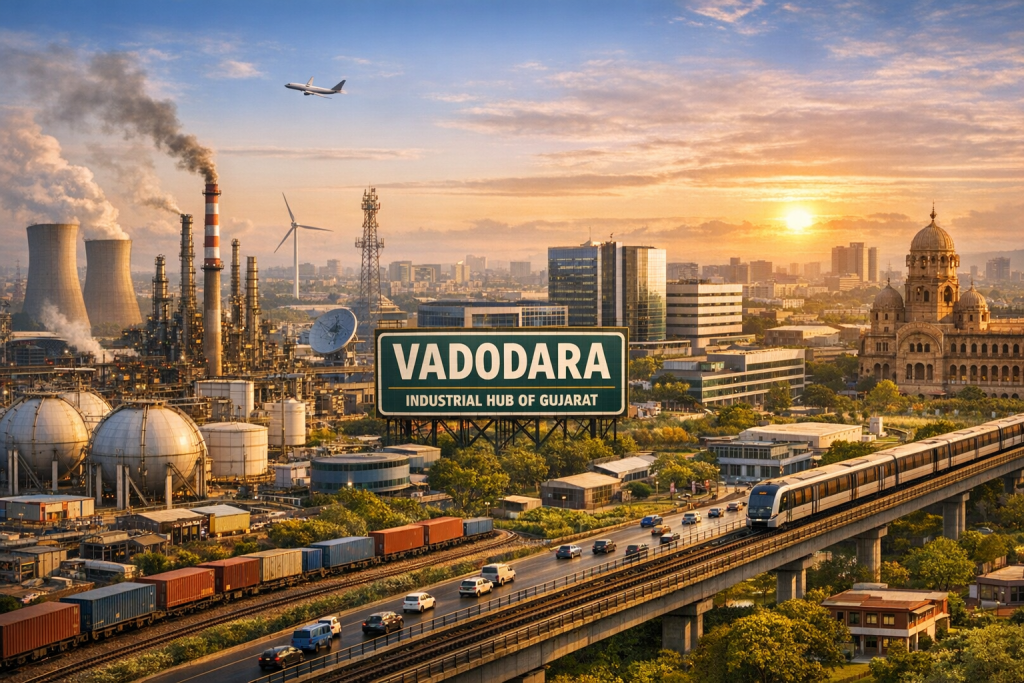
Vadodara is one of Gujarat’s key centers of economic growth and industrial development, playing a significant role in the state’s industrial landscape. The city’s transformation into a major industrial hub began during the post-independence era and accelerated due to its strategic location, skilled workforce, and strong infrastructure. Positioned between Ahmedabad and Mumbai, Vadodara benefits from excellent connectivity and access to major markets, ports, and industrial corridors.
The city has a diversified industrial base, with strong presence in sectors such as petrochemicals, fertilizers, pharmaceuticals, engineering, power generation, chemicals, and manufacturing. Vadodara is home to several large public and private sector enterprises, as well as small and medium-scale industries that contribute significantly to employment and economic stability. Industrial estates and business zones in and around the city support innovation, production, and supply-chain efficiency.
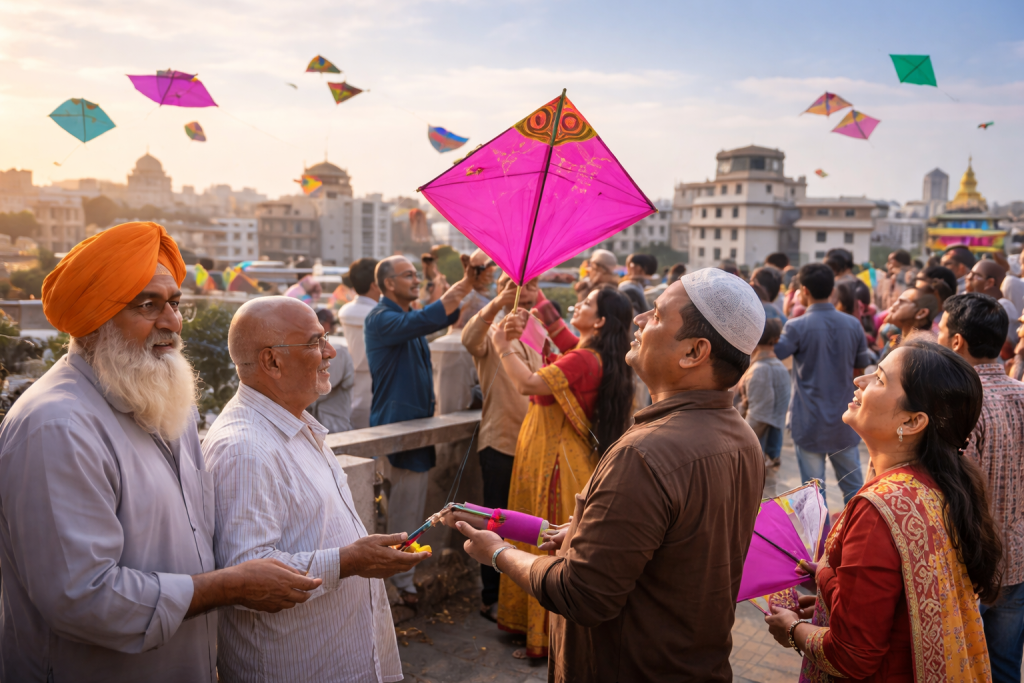
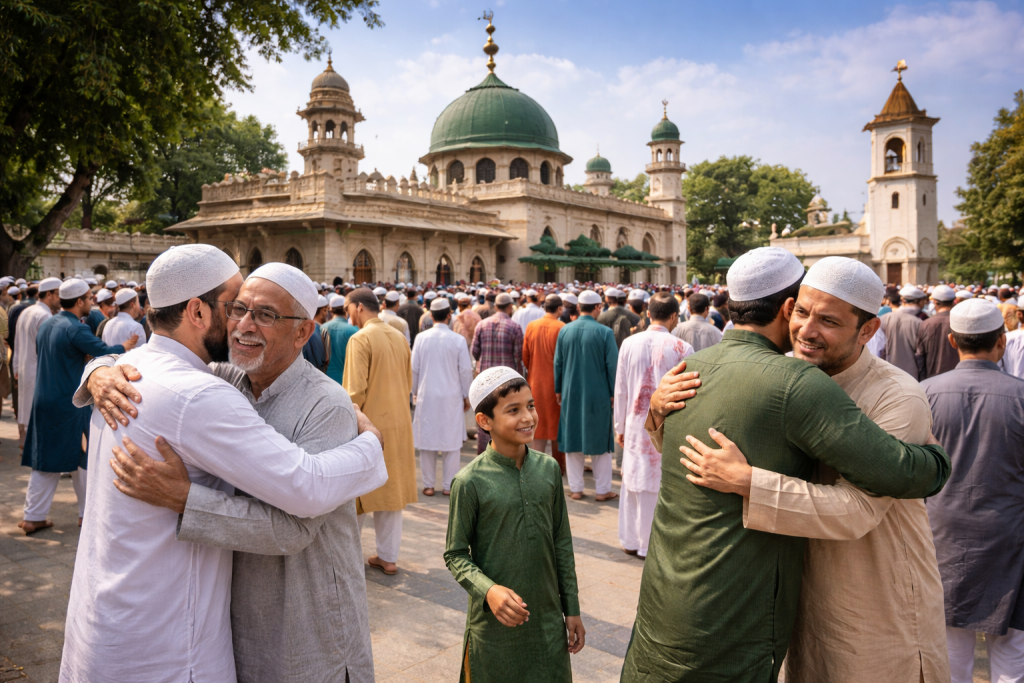
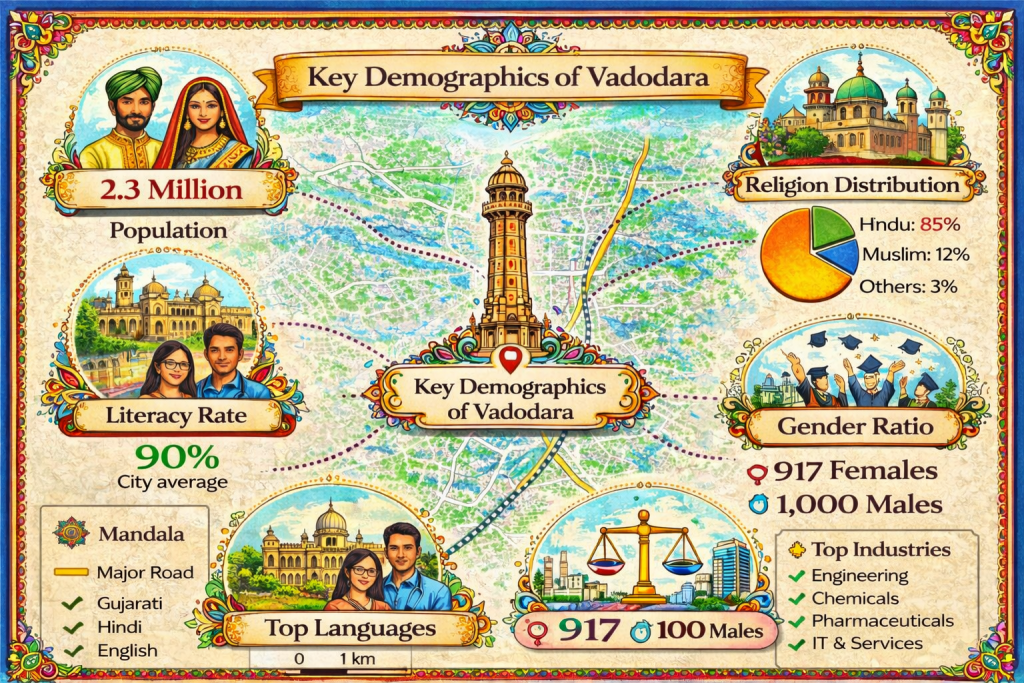
Vadodara is widely admired for its deep-rooted social harmony and inclusive way of life, where people from diverse religions, cultures, languages, and communities coexist peacefully. The city’s social fabric has been shaped over generations by values of mutual respect, tolerance, and cultural understanding. This harmonious environment is not only reflected during major celebrations but is also evident in everyday interactions, community living, and shared public spaces across the city.
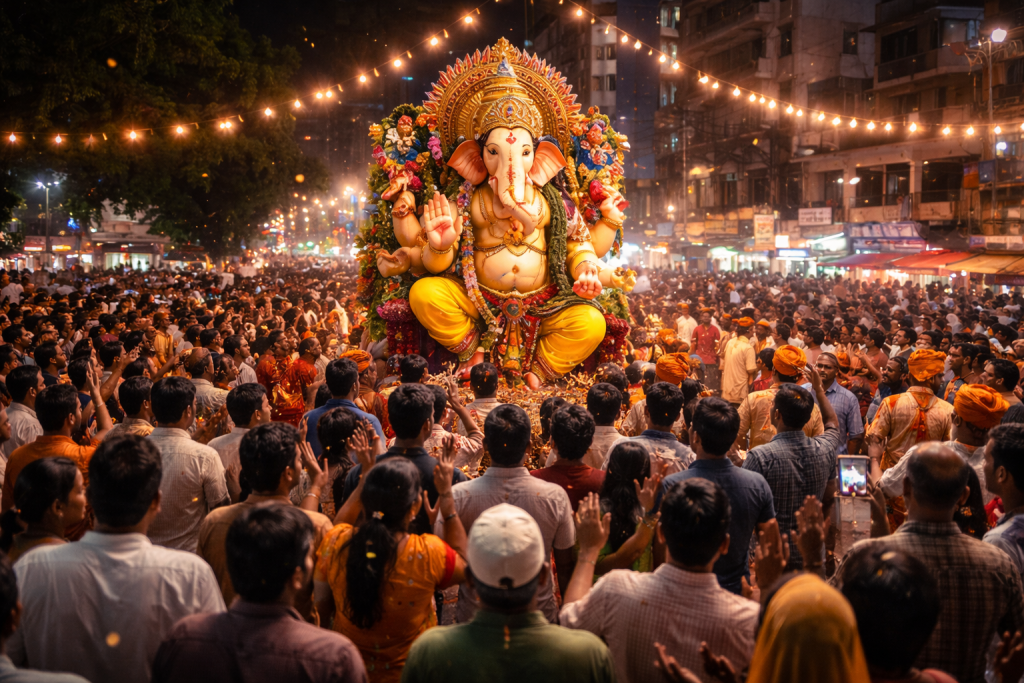
Festivals in Vadodara are more than religious events—they are collective cultural experiences that bring the entire city together. Celebrations such as Navratri, Diwali, Uttarayan (kite festival), Holi, Ganesh Chaturthi, Eid, and Christmas are observed with equal enthusiasm by people of all backgrounds. Homes, streets, markets, and public grounds come alive with lights, music, decorations, and traditional flavors, creating an atmosphere of joy and togetherness.
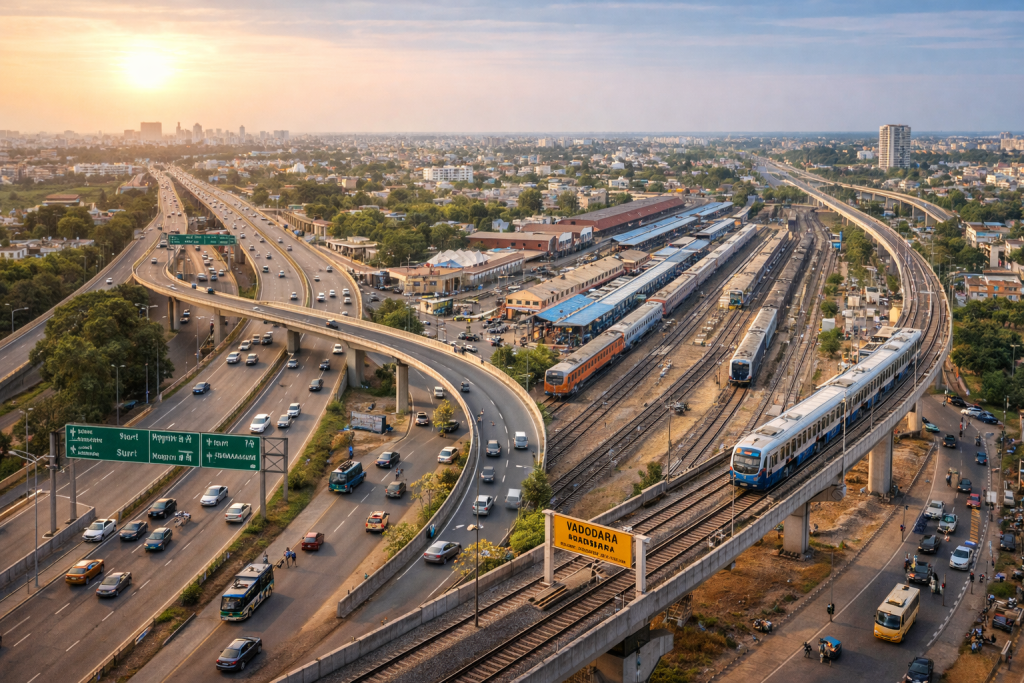
Vadodara is one of Gujarat’s most well-connected cities, supported by a strong and continuously developing transport and infrastructure network. Its strategic location between Ahmedabad and Mumbai places the city on major national and commercial corridors, making it an important hub for travel, trade, and industry in western India.
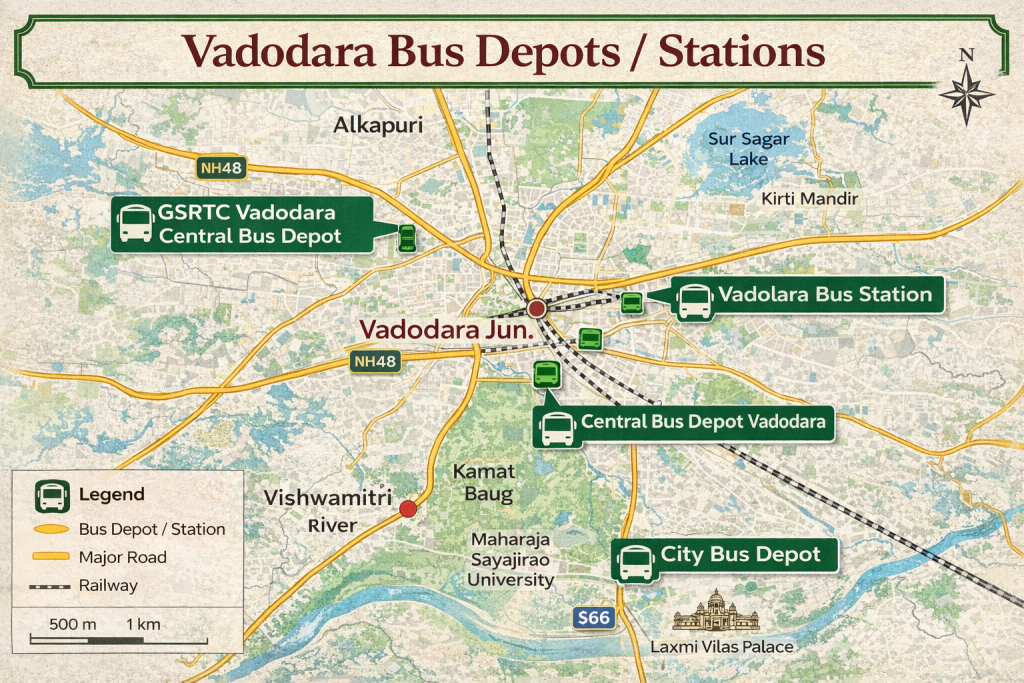
The city enjoys excellent road connectivity, with national and state highways linking Vadodara to key cities and regions across Gujarat and neighboring states. A well-developed road network, flyovers, and urban corridors supports smooth intra-city movement and reduces congestion. Vadodara is also a major railway junction, with frequent trains connecting it to metropolitan cities and regional centers across the country future development.
WhatsApp us